One failed component
A split vent collar, damaged flashing or a few missing shingles can support a local repair when the adjoining roof remains workable and compatible.

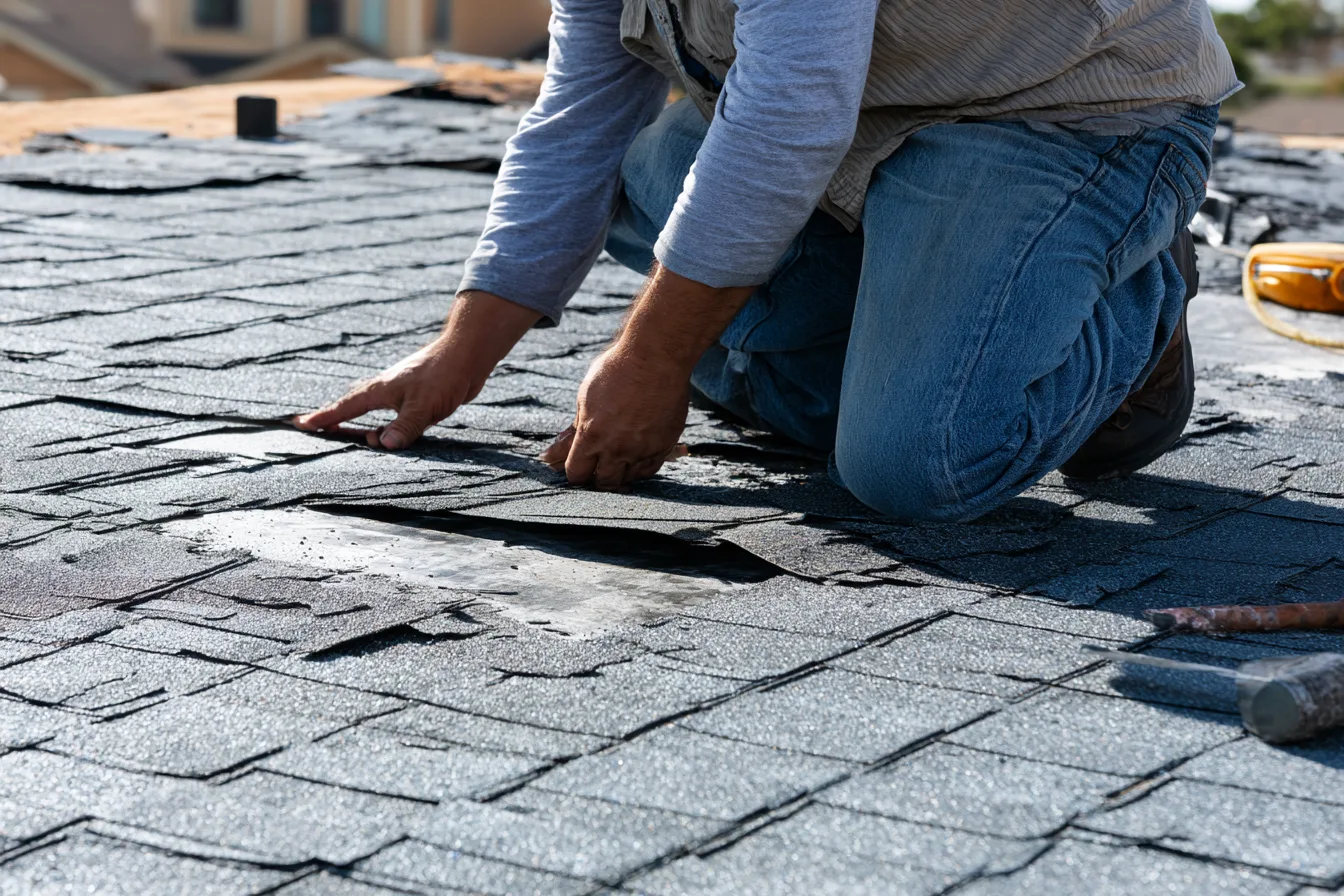
Understand which connected roof conditions make a repair useful and which widen the decision.
A repair is useful when it fixes the failure and joins sound roof material around it. Replacement becomes worth discussing when that connection cannot be made or deterioration extends across the roof. The decision follows the covering, deck and details, rather than age or a ceiling stain alone.
A split vent collar, damaged flashing or a few missing shingles can support a local repair when the adjoining roof remains workable and compatible.
Opening the roof can reveal damaged underlayment or softened wood. Those layers widen the repair because the new covering needs a sound place to finish and fasten.
Brittle shingles or several failures spread across an area make another isolated patch less useful. The inspection can compare a larger section repair with replacement.
A roof’s age and repair history provide context, but the covering now on the house may be newer than the house itself. We inspect what is there: workable shingles, sound decking, proper flashing connections and the extent of damage. A roof in sound condition deserves that answer too.

A repair price follows the failed detail, access and amount of roof opened. Replacement combines removal, deck assessment and a new roof system. Comparing the two means understanding the useful work each option leaves behind.
What remains and whether it supports the repair.
Wood and protective layers exposed during opening.
A local detail, one section or broader covering failure.
Tell us what changed at the property. Request a free roof inspection before deciding how much work to take on.