Localized damage
A sound run with a failed joint, outlet or support can allow a targeted repair. The surrounding material and attachment need to hold the correction.

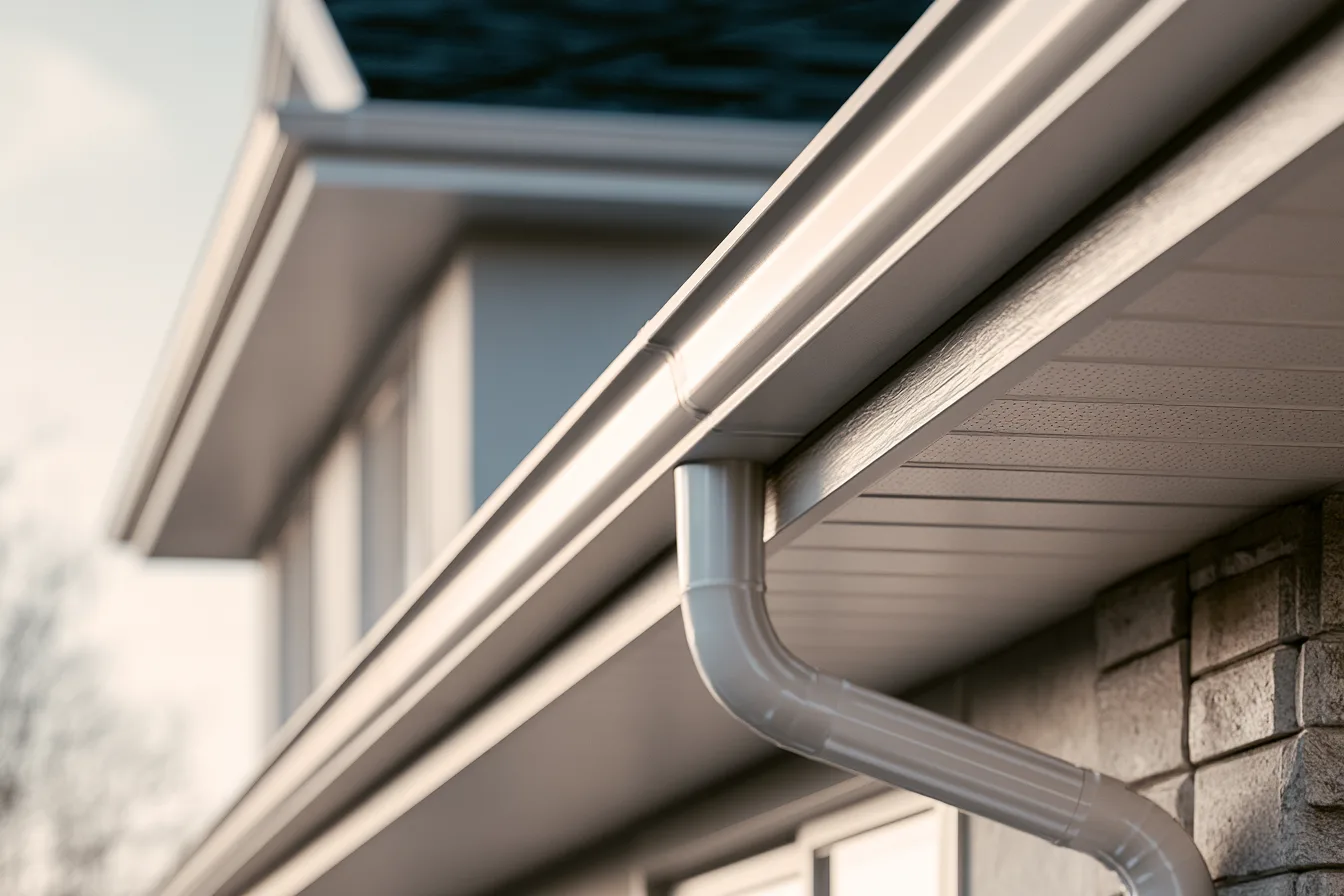
Keep roof runoff moving from the eaves into a planned discharge path.
A sagging section or leaking joint can spill roof runoff at the eave. Gutter work looks at the full path, including slope, outlets, downspouts, fascia attachment and where the water leaves the system. Replacing one visible joint does not settle a blocked outlet or loose support.
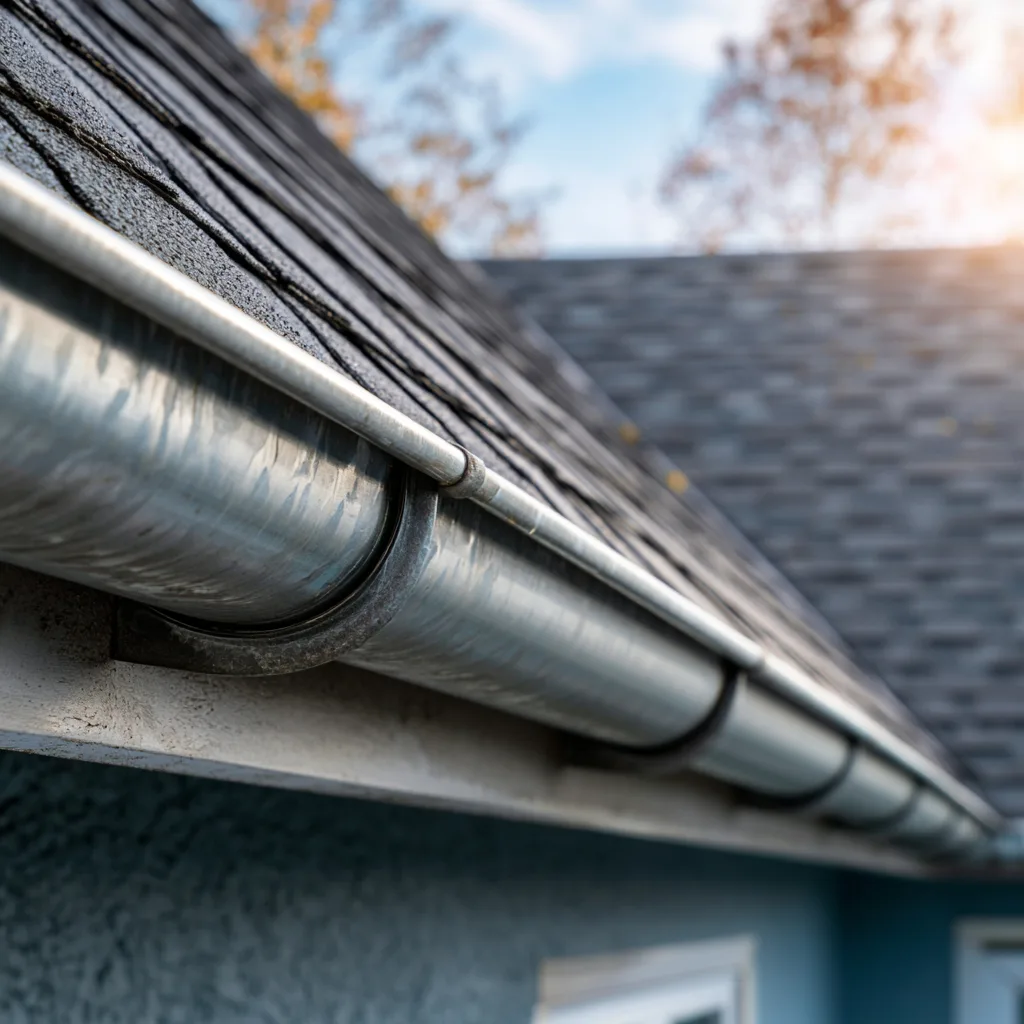
A sound run with a failed joint, outlet or support can allow a targeted repair. The surrounding material and attachment need to hold the correction.
Corroded sections, multiple distorted joints or failed supports can make replacement more practical. Rotted fascia beneath a hanger needs attention before a new gutter is secured.
Drip edge, gutter placement and the fascia connection affect how water leaves the roof. A gutter should catch runoff without directing it behind the roof edge. Downspout routing must also suit the property so discharge does not create another problem beside the building.
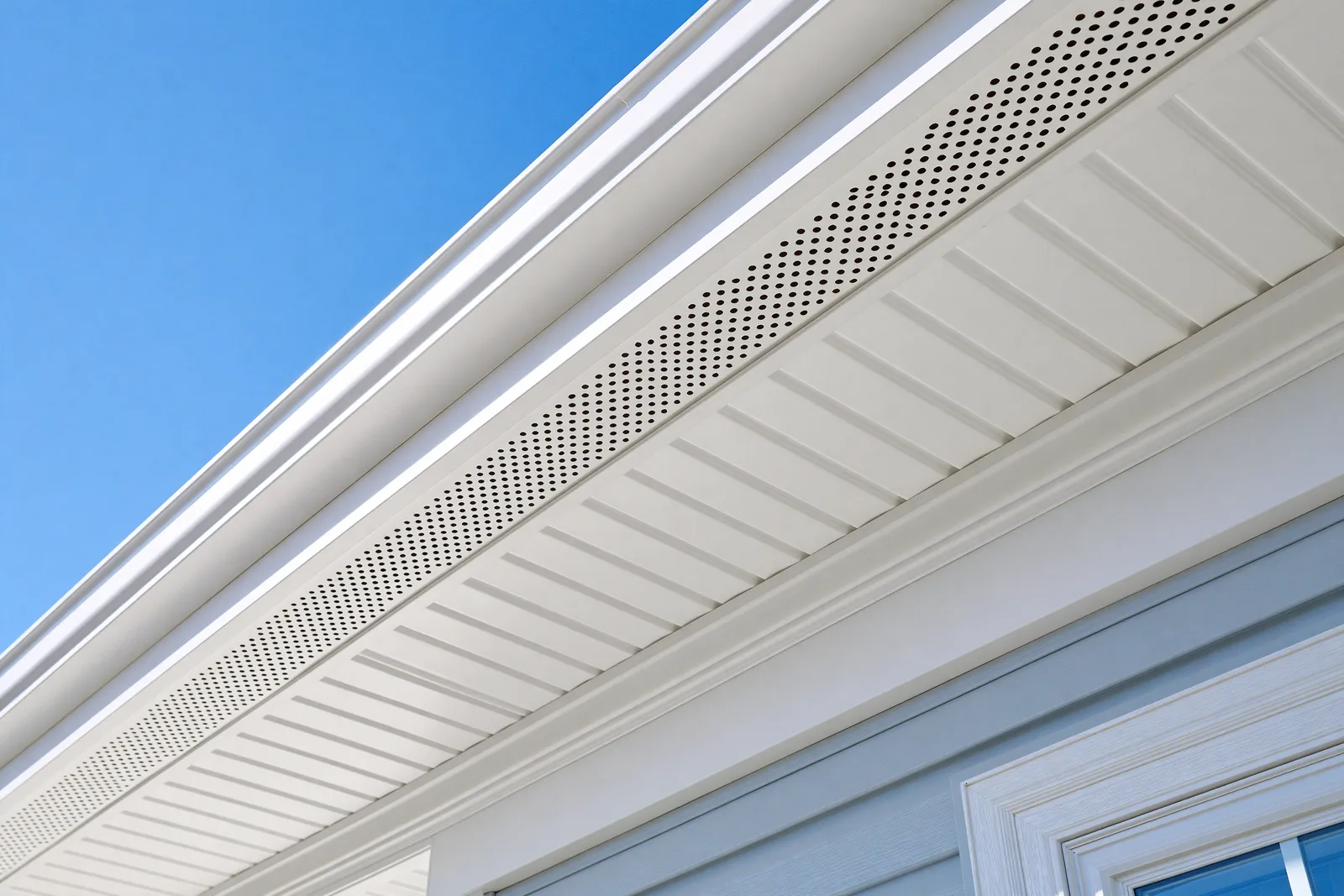
Water at an eave can have several paths. The inspection checks roof-edge details, gutter overflow and the underlying material rather than assuming the gutter alone caused the interior stain.
Yes, when the fascia cannot provide sound support or is deteriorated. New hangers need a suitable base; concealing damaged wood leaves that problem in place.
Describe the sagging, spilling or leaking section and request a free inspection.